



-
Cart is empty $0.00

 0
0


ב''ה
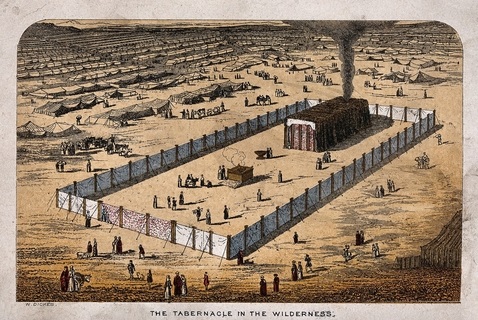
Subscribe to ourG-d instructed the Jews at Mt. Sinai to build a portable Tabernacle (Mishkan) for their travels through the wilderness on the way to Land of Israel. It was the temporary precursor to the Holy Temple at G-d’s chosen permanent site on the Temple Mount in Jerusalem.
The following are quotations about Gentiles worshiping at the Temple, from The Temple: Its Symbolism and Meaning Then and Now. (Authored by Joshua Berman.)
p.69-73. “The process of attaining a climate in which G-d’s Name is acclaimed throughout the nations reaches its apex in the early years of Solomon’s reign… Solomon had complete hegemony over the entire land of Israel [I Kings 5:1-14]. He had a flourishing and prosperous economy, peace with all his neighbors, and a large army. All these constitute achievements that earn a nation respect – then as well as today. The most detailed account of Solomon’s kingship, however, concerns his wisdom, and the impression it made on the neighboring rulers.
…his acclaim spread to all the nations of the world. Solomon’s acclaim and its importance as an extension of G-d’s acclaim reaches its pinnacle in Solomon’s dealings with Hiram… (I Kings 5:15-26)
“A House for G-d’s Name could not be built while relations with neighboring nations were strained. [Under Solomon] peace reigns, the Davidic dynasty is firmly established, and so the House for G-d’s Name can be built… The House for G-d’s Name would be made of materials donated by a neighboring nation [Tyre], thereby symbolizing that acclaim… it was the first time that a treaty had been established between Israel and a neighboring power.”
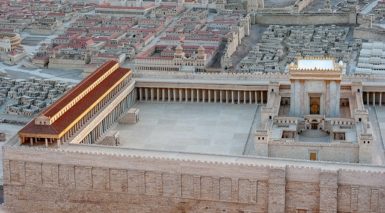
“The universal relevance of the Temple as a symbol of G-d’s Name is given special stress in Solomon’s [dedication] prayer… (I Kings 8:41-43):
41. And if a foreigner who is not of Your people Israel comes from a distant land for the sake of Your Name –
42. for they shall hear about Your great Name and Your mighty hand and Your outstretched arm – when he comes to pray toward this House,
43. oh, hear in Your heaven abode and grant all that the foreigner asks You for. Thus all peoples of the earth will know Your Name and revere You, as does Your people Israel. And they will recognize that Your Name is attached to this House that I have built.
“Solomon emerges as a figure commanding universal respect. But because he is only an extension of G-d’s Kingship, the respect he commands immediately converts into acclaim for G-d…”
“We opened our discussion of the concept of declaring G-d’s Name by probing its origins in the Book of Genesis. Abraham, who declared G-d’s Name, began the process of reversing the spirit of the builders of [the Tower of] Babel, who toiled for the glorification of their own name… The final redress of the spirit of Babel is the vision that animates the eschatology of Isaiah (2:1-3): …
2. And it will come to pass at the End of Days that the mountain of G-d’s House will be firmly established, even higher than the peaks and all the peoples will flow toward it as a river.
3. And many nations will go and will cry, ‘Let us go up toward the mountain of G-d’s House, to the House of the L-rd of Jacob, and we will learn from His ways and walk in His paths, for out of Zion goes forth the Torah and the word of G-d from Jerusalem.’
“Literally and conceptually, Isaiah’s image of the End of Days represents a reversal of the social and spiritual climate of the builders of [the Tower] of Babel… At Babel they looked only inwardly for direction concerning the conduct of their affairs, but in Jerusalem, they will look toward G-d. The city of Babel and its tower were symbols of the desire of man to make a name for himself, but in the End of Days, these will be redeemed as the city of Jerusalem and the Temple will emerge as site and symbol of the endeavor of proclaiming the Name of G-d.”


 Noahide


