




 Noahide


The Tradition that the Ark Rested on Mount Judi (Cudi)
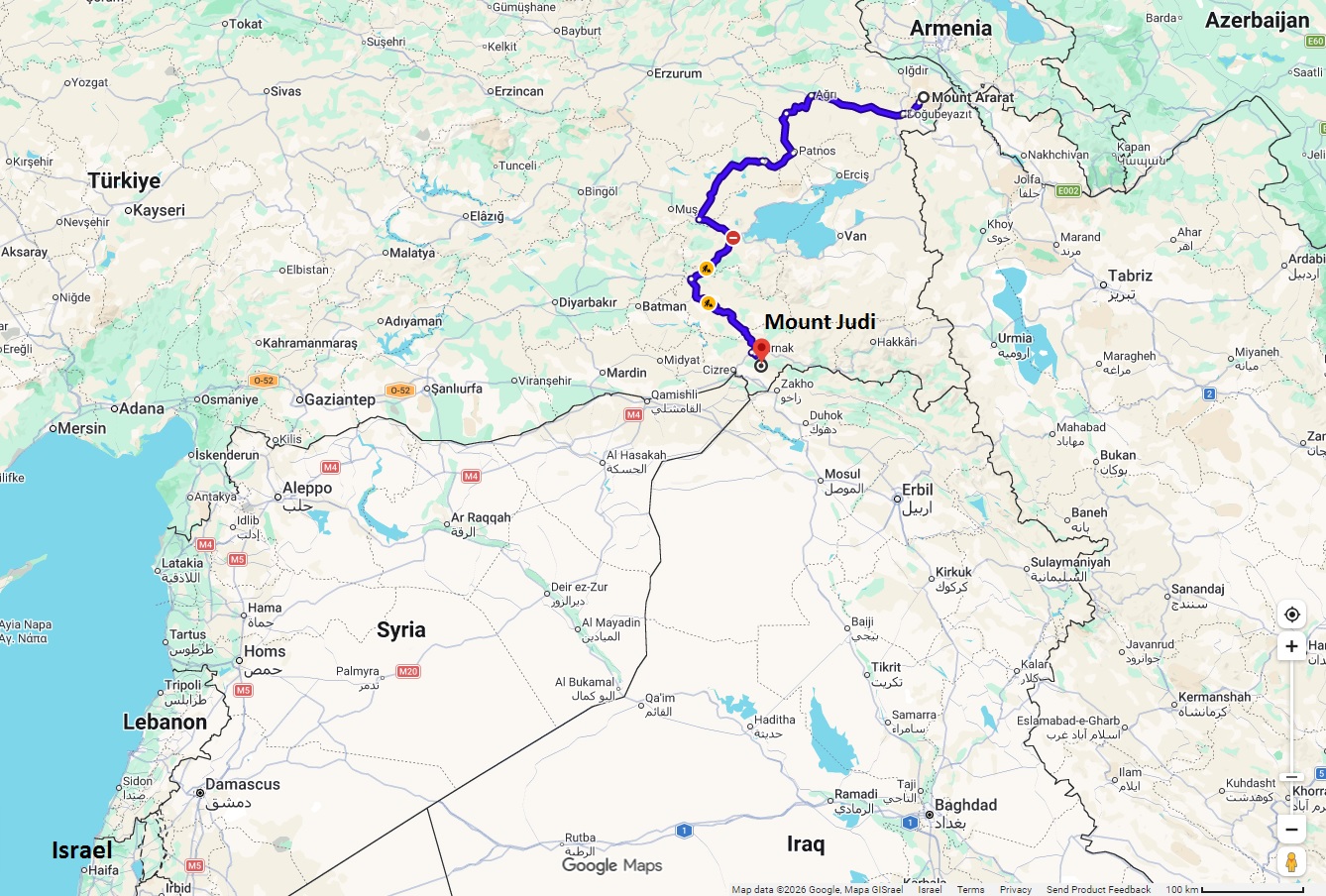
Recently, I learned of documented ancient traditions in Middle Eastern cultures that Noah’s Ark rested on Mount Judi. “Judi” is the Arabic name of a mountain in southeastern Türkiye, in an area that previously belonged to Armenia. The name in Turkish is “Cudi”.
I asked ChatGPT, “Please review the sources for the tradition that Noah’s Ark came to rest in Türkiye on Mount Judi (the Arabic name), which is also Mount Cudi in Turkish. Include very old sources such as Jewish (Talmud), pagan, qristian, Muslim, Greek and Babylonian. This will also include Josephus and sources that he cites. Also include modern Assyrianologists.”
The following is my presentation of the results of its search. I highlighted in yellow statements of traditions that pieces of the Ark on Mount Judi remained extant, at least until the fourth century C.E. However, the search results did not mention the Jewish tradition that in the Book of Esther, Haman obtained a 50-cubit long beam from Noah’s Ark. He used it for the gallows he intended for Mordechai, but he was hung upon it instead.
Overall assessment
The tradition that Noah’s Ark rested on Mount Cudi/Judi near modern Cizre in southeastern Türkiye is genuinely ancient. It is not merely a later Qur’anic identification. A geographically coherent tradition appears in:
- the Hellenistic Babylonian historian Berossus, as quoted by Josephus;
- Jewish Aramaic translations that say Kardu/Qardu;
- early Syriac qristianity, which likewise says Qardu;
- Greek qristian writers who locate the remains among the Cardyaeans;
- and finally the Qur’an’s explicit al-Jūdī.
However, the oldest surviving cuneiform flood account does not name Cudi. The Standard Babylonian Epic of Gilgamesh says that the vessel landed on Mount Nimush, formerly read Niṣir, generally placed farther east in Iraqi Kurdistan. Thus, there were at least two ancient Mesopotamian landing traditions: the [Gilgamesh] Nimush/Niṣir story and the later, but still very ancient, Corduene–Qardu–Judi tradition.
1. The geographical names
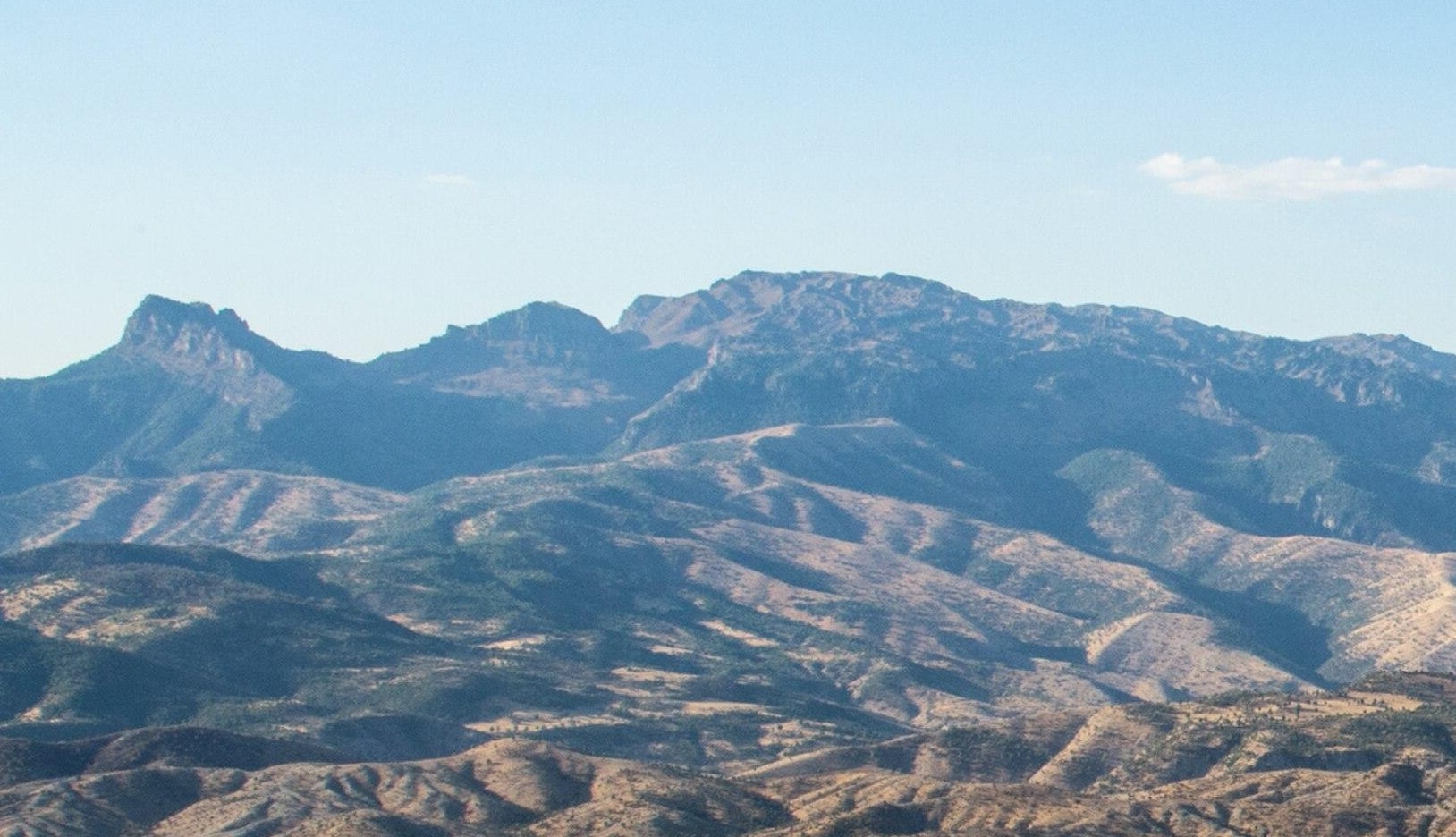
Mount Cudi lies near Cizre, close to the Upper Tigris. In earlier classical geography, the surrounding mountainous territory was known as:
- Greek Gordyene/Gordyaea;
- Latin Corduena;
- Armenian Kordukʿ;
- Syriac and Jewish Aramaic Qardū/Kardū.
Encyclopaedia Iranica locates ancient Gordyene in northern Mesopotamia, especially the mountains north of modern Cizre, and specifically notes that Gordyene was widely regarded in Syriac tradition as the home of Noah’s landing site on Cudi Dağı. (Iranica Online)
This geographical equivalence is important, but the names should not be treated as a simple unbroken etymological equation. Qardu, Corduene and Gordyene clearly designate the same general ancient territory; whether the Arabic name Jūdī developed directly from Qardu is philologically less certain.
2. Babylonian and Assyrian evidence
The older cuneiform story: Mount Nimush/Niṣir
The Assyriologist E. A. Speiser placed Mount Niṣir in the vicinity of modern Sulaymaniyah in Iraqi Kurdistan, considerably southeast of Cudi. He translated Genesis 8:4 as the “Ararat range,” while noting that the Akkadian account uses Niṣir.
The older Sumerian and Old Babylonian flood traditions are fragmentary at the point where an exact landing mountain might have been identified. It is the later Gilgamesh version that names Nimush.
Berossus: the earliest explicit Cudi-region testimony
A major change appears in Berossus, a Babylonian priest of Bel-Marduk who wrote a history of Babylonia in Greek during the early third century BCE. His work is lost, but substantial fragments survive through Josephus, Eusebius, Alexander Polyhistor and later chronographers. (ResearchGate)
Josephus quotes Berossus as saying that part of the flood vessel still existed: “in Armenia, at the mountain of the Cordyaeans.” People allegedly removed pieces of its bitumen and used them as protective amulets. (Lexundria)
Because the Cordyaeans inhabited ancient Gordyene/Corduene around the mountains north of Cizre, this is the earliest reasonably explicit surviving literary witness to a landing site in the Cudi–Qardu region. (Iranica Online)
Berossus is especially important because he represents a Babylonian flood tradition, yet he does not preserve the Gilgamesh location at Nimush. Either he knew a different geographical form of the Babylonian tradition, or he—or his sources—had relocated the landing site to the better-known Cordyaean mountains.
Because Berossus survives only through later quotations, one cannot be completely certain how closely Josephus’s wording reproduces Berossus’s original Greek. Nevertheless, both Josephus and the Eusebian transmission preserve the significant expression mountains or mountain of the Cordyaeans.
3. Jewish sources
Genesis: “the mountains of Ararat”
The Hebrew text of Genesis 8:4 does not say that the Ark rested on the single mountain now called Mount Ararat or Ağrı Dağı. Instead, it says:
הָרֵי אֲרָרָט — “the mountains of Ararat.”
Speiser therefore translated it as the “Ararat range” and emphasized that the plural terminology describes a mountain region rather than one named summit.
In Biblical usage, Ararat is fundamentally a territorial or political name associated with ancient Urartu. Genesis therefore supplies a broad northern mountain region. But by itself, it does not decide between modern Ağrı Dağı and Cudi.
The Apocrypha Book of Jubilees: Mount Lubar
The Apocrypha Book of Jubilees, generally dated to the second century BCE, specifies Mount Lubar, described as one of the mountains of Ararat. Noah later plants his vineyard there.
Lubar’s exact identification remains uncertain. It becomes relevant to the Cudi tradition because the fourth-century qristian writer Epiphanius later places Mount Lubar between Armenia and the Cardyaeans. Thus, the name may have been understood in Late Antiquity as belonging to the Corduene borderland, but Jubilees alone does not prove this.
Targum Onkelos: “the mountains of Kardu”
The clearest Jewish identification with the Cudi region occurs in Targum Onkelos, the authoritative Jewish Aramaic translation [targum] of the Torah. At Genesis 8:4 it renders the Hebrew “mountains of Ararat” as:
טוּרֵי קַרְדּוּ — “the mountains of Kardu.”
This is a direct reference to Qardu/Corduene rather than to the later volcanic Mount Ararat. (Sefaria)
Other Aramaic targums preserve related forms. Pseudo-Jonathan, for example, speaks of mountains associated with Qadron/Qardania and Armenia. These witnesses show that the Kardu localization was well established in Jewish Aramaic interpretive tradition, although the individual targums reached their surviving forms at different dates. (Sefaria)
The Babylonian Talmud
The most relevant Talmudic passage is Sanhedrin 96a, not a statement in the Flood discussion of Sanhedrin 108. Rav Pappa relates that the Assyrian king Sennacherib found a plank from Noah’s Ark, made it into an idol and promised to sacrifice his sons if it granted him victory. His sons subsequently killed him. (ResearchGate)
This passage is often cited in support of Cudi because Sennacherib’s capital and campaigns belonged to northern Mesopotamia, and Assyrian activity is attested on and around Cudi. But the Talmud itself:
- does not name Cudi, Kardu or Ararat as the place where the plank was found;
- does not say that Sennacherib found it on a mountain;
- and cannot serve as an independent geographical identification.
It is a Talmudic Jewish belief that physical wood from the Ark remained accessible in the Assyrian world, but it gives only indirect evidence for Mount Cudi.
4. Josephus and the pagan Greek historians he cites
Josephus wrote his Jewish Antiquities in Greek near the end of the first century CE. His discussion preserves several distinguishable traditions.
Josephus’s own account
Josephus first paraphrases Genesis broadly: the Ark rested on “a certain mountain in Armenia.” He then says that the Armenians called the site Apobatērion, “the Place of Descent,” and that inhabitants still displayed remains of the Ark. (Lexundria)
This wording is not sufficiently precise to establish Cudi. “Armenia” in Greek and Roman geography covered a much larger political and cultural region than the modern Republic of Armenia, but Josephus does not identify this “Place of Descent” with Corduene in his own narrative.
Berossus the Chaldean
Josephus’s strongest source for Cudi is Berossus’s statement about the Ark at the mountain of the Cordyaeans. This is geographically specific and points toward the Cizre–Cudi region. (Lexundria)
Hieronymus the Egyptian and Mnaseas
Josephus then says that Hieronymus the Egyptian, author of a Phoenician history, Mnaseas, and many others mentioned “the same.” Their works are lost, and Josephus gives no quotation from them. (penelope.uchicago.edu)
Consequently, they are supporting testimony for the existence of a widespread Hellenistic flood-and-Ark tradition, but we cannot confidently determine whether each writer independently specified Corduene or merely spoke of an Armenian landing place.
Nicolaus of Damascus
Josephus quotes Nicolaus of Damascus as locating the Flood mountain:
- in Armenia;
- above the country of Minyas;
- on a great mountain called Baris;
- where timber from the vessel was reportedly preserved.
This source is frequently added to the Cudi dossier, but that identification is uncertain. Nicolaus does not say “Cordyaean,” “Kardu” or “Judi.” Depending upon how Minyas and Baris are reconstructed, his location might belong to a different part of Armenia. Therefore, Nicolaus is evidence for an Armenian Ark-relic tradition, but not unequivocal evidence for Cudi.
Abydenus
The Greek-language writer Abydenus also preserved a version of Berossus’s flood history. In the surviving fragment, the vessel was said to remain in Armenia, and inhabitants made bracelets or amulets from its wood.
This corroborates the ancient relic tradition, although the surviving wording does not identify the exact mountain as clearly as Josephus’s “mountain of the Cordyaeans.”
5. Early qristian sources
The Syriac Peshitta
The Syriac Peshitta translation of Genesis 8:4 says that the Ark rested: “on the mountains of Qardu.”
This is highly significant. Syriac-speaking qristians lived immediately south and east of the Cudi region and used the native geographical name Qardu, corresponding to classical Corduene/Gordyene. The Peshitta therefore preserves the same basic localization as Targum Onkelos.
Epiphanius of Salamis
The fourth-century C.E. Greek qristian writer Epiphanius gives particularly explicit testimony. In the Panarion he says that the Ark rested:
- in the highlands of Ararat;
- between Armenia and Cardyaei;
- on the mountain called Lubar.
Elsewhere he says that remains of Noah’s Ark were still being shown “in Cardyaei.”
This is one of the most valuable early qristian texts because it joins together three strands:
- Biblical Ararat;
- the Jewish name Lubar;
- the Cordyaean or Qardu geographical region.
It does not use the Arabic name Jūdī, which did not yet belong to qristian Greek terminology, but its Cardyaei location points toward the Cudi region.
Ephrem and the Syriac tradition
Ephrem the Syrian, who lived in the fourth century and was associated with Nisibis and Edessa, belonged to the cultural region immediately adjoining Qardu. Modern studies of the Syriac sources find that Mount Qardo and the “mountains of Qardo” remained the standard Ark localization in much of Syriac qristian literature. The particular peak and monastery were also known as the Mountain of the Ark. (ResearchGate)
Later Syriac hagiographies connected the site with Jacob of Nisibis and with monasteries built there to commemorate the Ark. These stories are legendary in form, but they demonstrate that Cudi/Qardu was not simply borrowed from Islam: the qristian tradition was already flourishing before the Qur’an.
6. The Qur’an and early Muslim interpretation
Qur’an 11:44 states directly:
وَاسْتَوَتْ عَلَى الْجُودِيِّ
“The Ark rested upon al-Jūdī.”
The Arabic text itself says al-Jūdī without including the word jabal, “mountain,” although Muslim commentators universally understood it as the name of a mountain.
This is the earliest source that uses the name Jūdī in precisely this form. Unlike Genesis, it is not a general territorial expression: it names the landing site.
A report attributed to the early Qur’anic exegete Mujāhid ibn Jabr identifies Judi as a mountain in al-Jazīra, meaning Upper Mesopotamia. A similar report from Qatāda places it in the land of al-Jazīra and says that the vessel remained visible to early generations.
Medieval Muslim geographers subsequently placed Judi in the Upper Tigris region:
- Ibn Khordādhbeh associated it with the northern Mesopotamian or Kurdish country;
- al-Masʿūdī placed the tradition in Assyria near the Tigris;
- Yāqūt located the mountain above Jazīrat Ibn ʿUmar, the medieval name of modern Cizre.
This later localization agrees closely with the ancient geography of Qardu/Corduene and with modern Mount Cudi. (worldhistory.org)
7. What modern Assyriologists and specialists conclude
E. A. Speiser
Speiser kept the cuneiform and Biblical locations distinct:
- Akkadian version: Mount Niṣir, near Sulaymaniyah;
- Genesis: the broader Ararat range.
His treatment does not specifically endorse Cudi, but it undermines the assumption that Genesis necessarily means the single modern peak Ağrı Dağı.
Andrew R. George
Andrew George’s standard work on the Babylonian Gilgamesh Epic reads the landing mountain in that story as Nimush.
Irving Finkel
British Museum Assyriologist Irving Finkel distinguishes three important “Ark mountains” rather than identifying them with one another:
- modern Mount Ararat/Ağrı Dağı;
- Mount Cudi;
- Mount Niṣir or Pir Omar Gudrun, associated with Gilgamesh.
This is probably the best concise representation of the modern scholarly position: these are three historically distinct geographical traditions.
Leonard William King and Assyrian Mount Nipur
The Assyriologist L. W. King identified the Mount Nipur mentioned in Sennacherib’s military records with Mount Cudi. Assyrian reliefs and inscriptions found in the area confirm Assyrian royal activity there. (ResearchGate)
This is useful for identifying the mountain in Assyrian geography, but it does not prove that an Assyrian inscription associated Nipur/Cudi with Noah’s Ark. The surviving royal inscriptions concern military campaigns, stone and imperial control, not the Flood.
Nicholas Al-Jeloo
Nicholas Al-Jeloo’s study, “Qardo and the Mountain of Kēwillā,” assembles the Assyrian/Syriac textual, geographical and folkloric evidence. It documents the continuity of the Qardu Ark tradition from late antiquity through medieval Syriac monasteries and local Assyrian memory. (ResearchGate)
His work is valuable as a synthesis, although some proposed links—particularly attempts to connect every Assyrian notice of Cudi directly to the Ark—remain interpretive rather than demonstrated by cuneiform texts.
Final evaluation
The evidence supports the following conclusions:
1. The Cudi tradition predates Islam.
Berossus’s Cordyaean mountain, Jewish “Kardu,” the Syriac Peshitta’s “Qardu,” and Epiphanius’s Cardyaei all precede the Qur’an.
2. Berossus is the earliest surviving reasonably explicit witness.
His third-century-BCE tradition, preserved by Josephus and Eusebius, places the vessel at the mountain or mountains of the Cordyaeans—the ancient territory surrounding modern Cizre and Cudi.
3. The Jewish evidence is strongest in the targums, not in the Talmud.
Onkelos explicitly says “mountains of Kardu.” Sanhedrin 96a merely tells of Sennacherib finding a plank from the Ark and gives no geographical name.
4. The early qristian evidence is particularly strong.
The Peshitta says Qardu, while Epiphanius locates Lubar between Armenia and Cardyaei and says that remains were shown there.
5. The Qur’an preserves and fixes the name al-Jūdī.
Early Muslim commentators place it in Upper Mesopotamia, and later geographers identify the area near Cizre.
6. The earliest surviving Babylonian cuneiform account remains an important difficulty.
The Gilgamesh story names Nimush/Niṣir, not Cudi. One should therefore not claim that every Babylonian tradition independently identified Mount Cudi.
7. Historical tradition.
The sources establish that people in antiquity and Late Antiquity believed that Ark remains existed in the Corduene/Qardu/Cudi region. No recovered piece of wood, bitumen, inscription or structure from Cudi has been academically authenticated as part of Noah’s Ark.
– By Dr. Michael Schulman, Director of Ask Noah International